
If you’re curious about history, these 1 World War facts will help you understand one of the most impactful conflicts in modern times. Known as World War I, this war reshaped nations, technologies, and global politics forever.
What Was World War 1?
World War 1 lasted from 1914 to 1918 and involved major global powers divided into two groups:
Allied Powers (France, Britain, Russia, later the U.S.)
Central Powers (Germany, Austria-Hungary, Ottoman Empire)
The war began after the assassination of Archduke Franz Ferdinand, which triggered a chain reaction of alliances and conflicts.
Key 1 World War Facts You Should Know
Here are some important and easy-to-understand facts:
-Over 16 million people died during the war
-It was one of the first wars fought with modern technology
-The US joined it in 1917,
-The war finally ended in 1919
Causes of World War 1
- Militarism – Countries built large armies and weapons, which created tension.
- Alliances – Nations formed defensive agreements that pulled many into war.
- Imperialism – Competition for colonies increased rivalries.
- Nationalism – Great pride and desire for independence fueled conflict.
1 World War Weapons Facts
One of the most interesting aspects of the war is the advancement in weapons. These 1 World War I weapons facts show how warfare changed forever:
New and Deadly Technologies
Machine Guns
Can fire hundreds of bullets per minute, causing massive casualties.
Tanks
First introduced by the Allies to break trench stalemates.
Poison Gas
Chlorine and mustard gas caused blindness, burns, and death.
Submarines (U-boats)
Used by Germany to attack ships underwater.
Aircraft
Initially used for spying, later for combat and bombing.
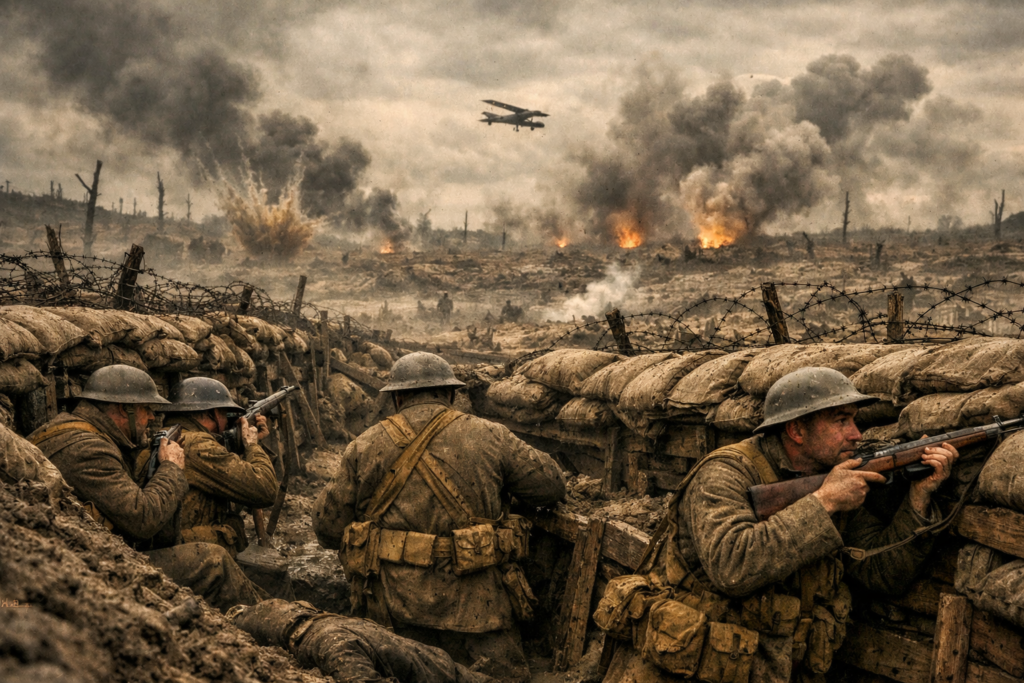
Life in the Trenches
Soldiers spent most of their time in muddy trenches. Conditions were extremely harsh:
-Constant threat of enemy attacks
-Poor hygiene and diseases
-Rats and insects everywhere
-Emotional stress and fear
This type of fighting is known as trench warfare, a defining feature of World War 1.
-Major Battles of World War 1
-Battle of the Somme
-One of the deadliest battles
-Over 1 million casualties
-Battle of Verdun
-Longest battle of the war
-Symbol of French resistance
-First Battle of the Marne
-Stopped Germany’s advance into France
-Impact of World War 1
The war had long-lasting effects across the world:
-Redrew national borders
-Led to economic crises
-Created political instability
-Set the stage for World War II
-Quick Summary of 1 World War Facts
FAQs About 1 World War I Facts
- What started World War 1?
The assassination of Archduke Franz Ferdinand triggered the war due to existing political tensions and alliances.
- Why is World War 1 important?
It changed global politics, led to new nations, and set the stage for World War 2.
- What were the main weapons used?
Machine guns, tanks, poison gas, submarines, and aircraft were widely used.
- How did World War 1 end?
It ended with Germany’s surrender and the Treaty of Versailles in 1919.
- How many people died in World War 1?
Approximately 16 million people lost their lives.
Conclusion: Why These 1 World War Facts Matter
Understanding these 1 world war facts helps you see how history shapes the present. From devastating battles to revolutionary weapons, this war changed the world forever. The evolution of warfare, especially highlighted through 1 world war weapons facts, still influences modern military strategies today.
keep exploring history—because the past always has lessons for the future.